
St. Mary's Episcopal Church
A brief introduction and historySt. Mary’s: A church on a mission
In 1882 the parishioners of St. Mark’s in Palatka and established a mission church in the Newtown neighborhood.
The mission church’s ministry was founded by John W. Purcell, a seventy-year-old African American who had moved to Palatka from Winnsboro, South Carolina for his son Isaac to attend law school. John Purcell was a well-educated master carpenter, prosperous land owner and a licensed Episcopal lay reader. Purcell held Episcopal worship services in his residence in “Newtown” at 616 Lemon Street,(1) and within two years his congregation outgrew his home. The Episcopal Diocese of Florida invited Purcell to be a delegate to its 1883 convention making him the first Black representative to attend the annual gathering.(2)
In 1883, with financial support from St. Mark’s Episcopal Palatka and the land donated at 809 Lemon Street from real estate developer George Burt [Lot 4, Block 63, Book T, p520, Putnam County Public Records](3), Purcell and his four sons(4) began construction on the Carpenter Gothic style church, a “small scale model of St. Mark’s Palatka,” for his congregation(5).
St. Mark’s Episcopal Church at Palatka is the only Florida Carpenter Gothic church designed by architect Richard Upjohn and the only church in Florida for which Upjohn personally drew plans(6). Upjohn was the architect of Trinity Episcopal Church on Wall Street in New York City and the founder of the American Institute of Architects. Architectural historian Elsbeth K. Gordon affirms in Heart and Soul of Florida: Sacred Sites and Historic Architecture (2013) that there are several Gothic Revival churches in Florida that claim to be designed by Upjohn using his pattern book, but only St. Mark’s had hand-drawn plans by the architect(7).
George Burt’s brother James Burt was an early planner of Palatka who platted and sold the real estate lots of Newtown. James Burt also found a calling to St. Mark’s Palatka in much the same capacity as Purcell: church founder, lay reader, and construction manager of each respective church. In the survey collection of Carpenter Gothic Episcopal churches in Florida, Spires in the Sun (2023), the authors conclude that the match in the two men’s roles suggest the possibility that it may have been Burt and Purcell who forged the interracial alliance that resulted in the St. Mark’s sponsoring Purcell’s mission and oversight in the two hand-built churches(8).
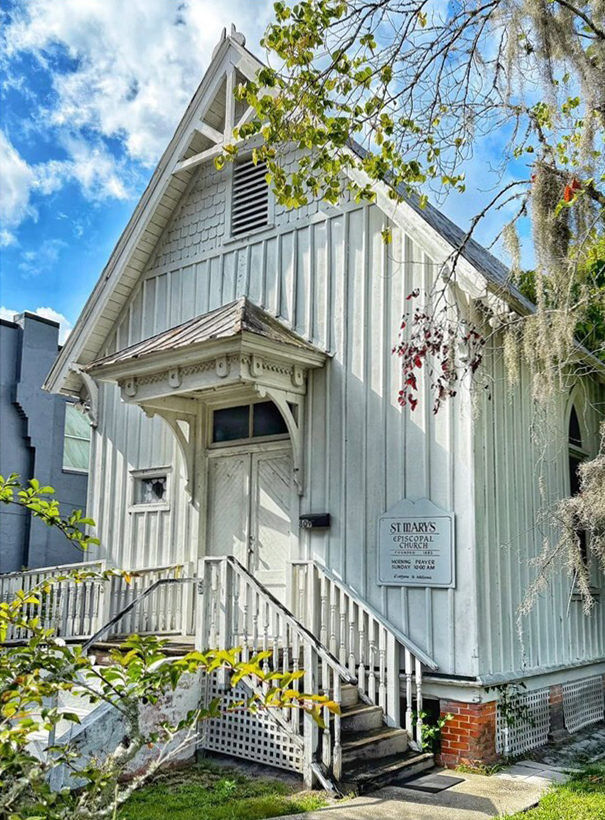
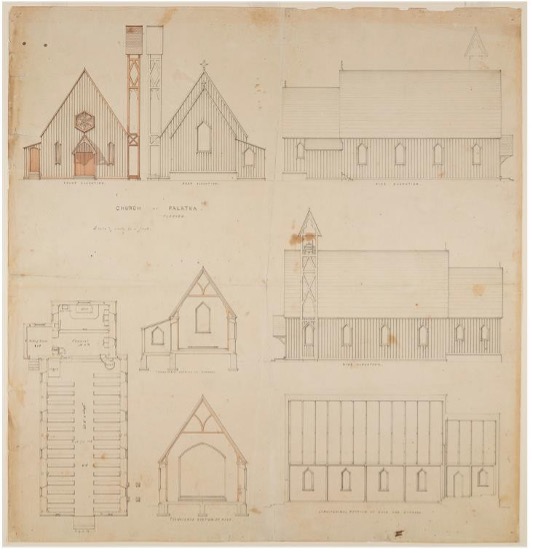
Upjohn, Richard (1854). Architectural drawing of St. Mark’s Episcopal Church at Palatka. Four elevations, plan and two sections. Ink and wash, 20¾ x 20″ (52.7 x 50.8 cm). George Fairbanks Collection. Special Collections and Archives, Florida State University Libraries, Tallahassee, FL.
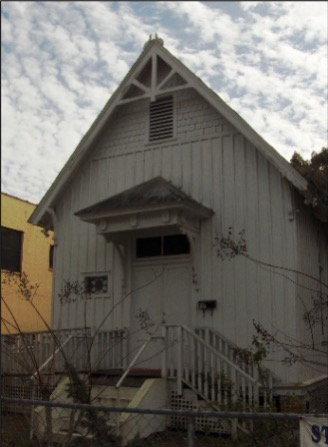
St. Mary’s Episcopal Church, Palatka. Photo courtesy Palatka Daily News
By tradition, Episcopal bishops annually visit each parish and mission church within their Diocese for leading worship services and conducting confirmations. Between 1886 to 1924, Bishop Edwin Gardner Weed came regularly to Palatka preaching at St. Mark’s on Sunday mornings and walking to St. Mary’s to teach Sunday school and conduct services in the afternoon(9). During the early part of Weed’s episcopate, St. Mary’s gained the ministry of an African-American seminarian, Edward H. Butler, who followed the legacy of John Purcell(10). On April 13, 1889, in a service at St. Mary’s, Bishop Weed ordained Butler to the priesthood making him the first black priest, Episcopal or Catholic, to be ordained in Florida(11). Twenty years later, because in the Black community of Jacksonville’s St. Philip’s mission had been established by Bishop John Freeman Young and the Reverend Brook G. White, the Palatka mission church became St. Mary the Virgin and by 1907 was renamed as St. Mary’s(12).
Today St. Mary’s enjoys the attendance of a handful of members of the congregation for special services and community events, according to John Alexander, the Senior Warden at St. Mary’s. Alexander came to St. Mary’s in 1966 to become its organist where Wilbur Belton(13) had been the church organist playing on its “quite challenging and vigorous” pump organ. For decades, the congregations of St. Mark’s and St. Mary’s have met for collaborations of work on the church grounds, repairs to the vintage structure, Christmas carol sing-alongs, Kwanzaa celebrations, community dinners and an Absalom Jones Feast Day Service on February 13 of this year 2025.
St. Mary’s Historical Photos
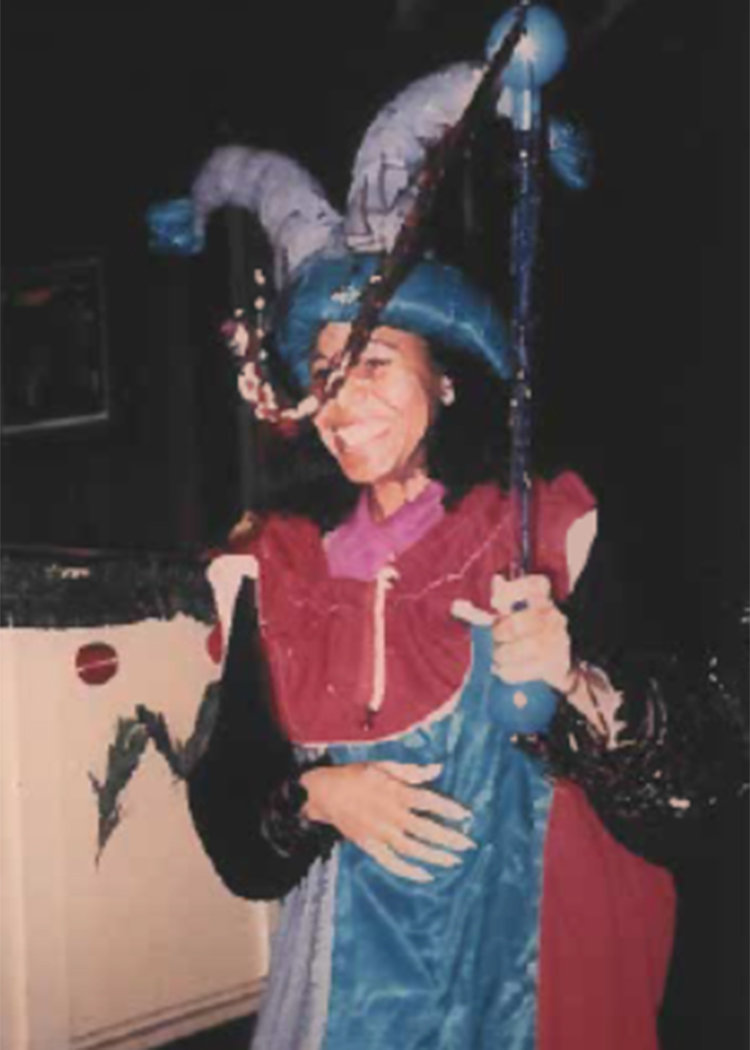
Storytime Story Time Huggs with Tena Brown for Ages 3 to 6
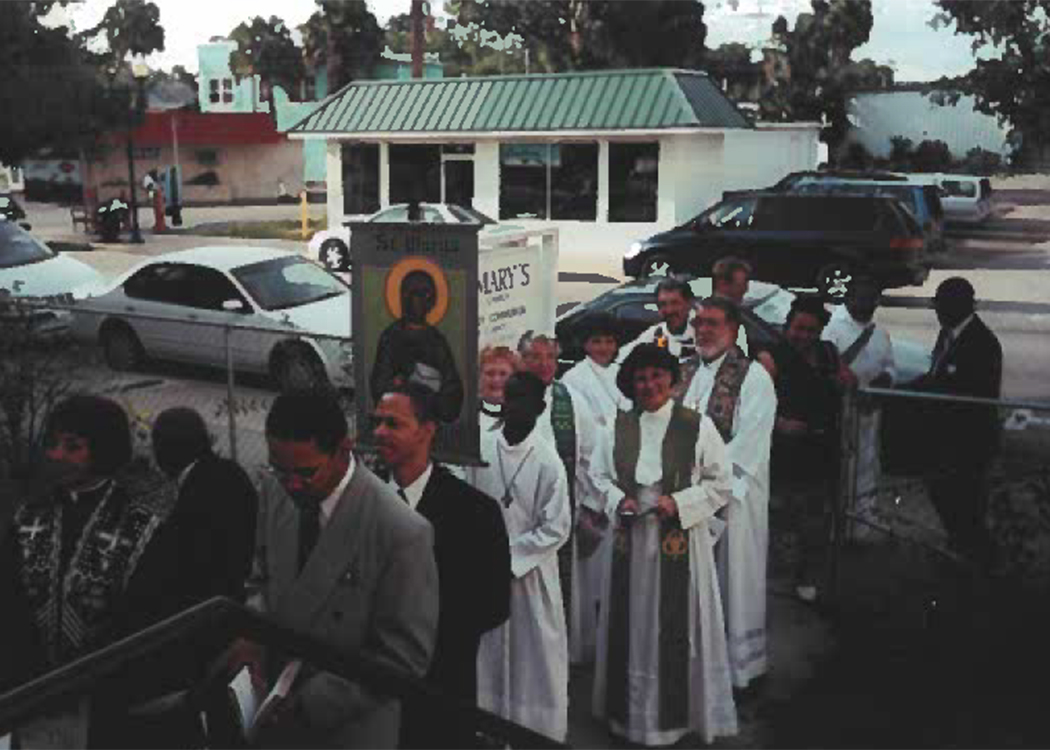
St. Mary’s Sunday worship procession
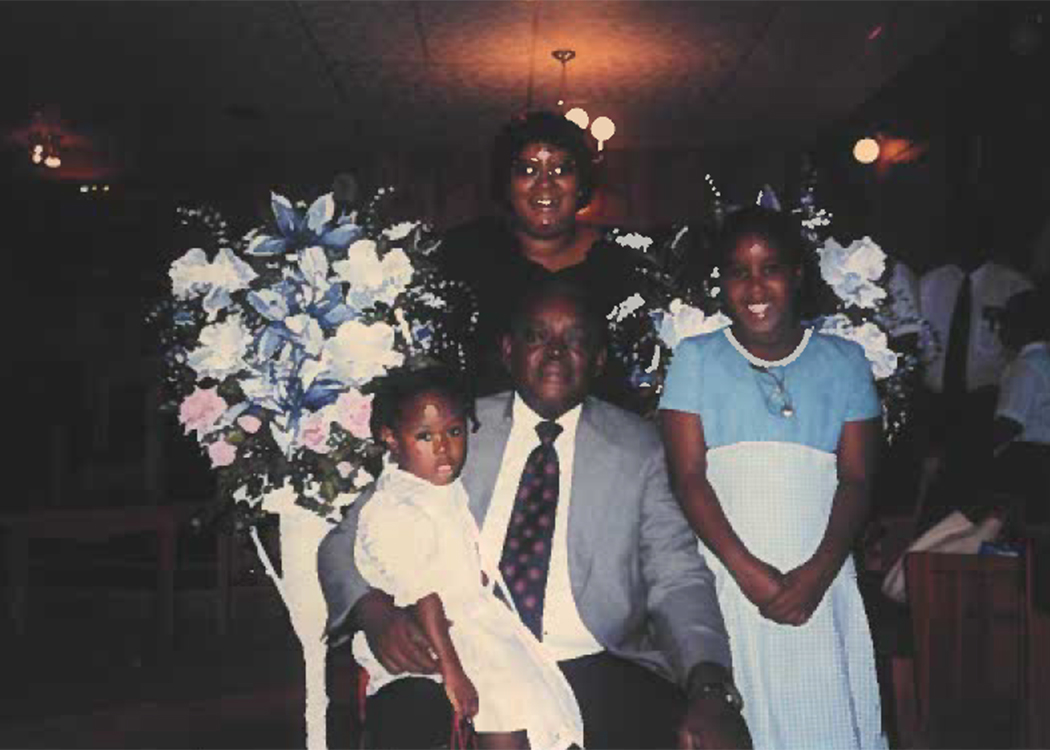
St. Mary’s Sunday worship procession
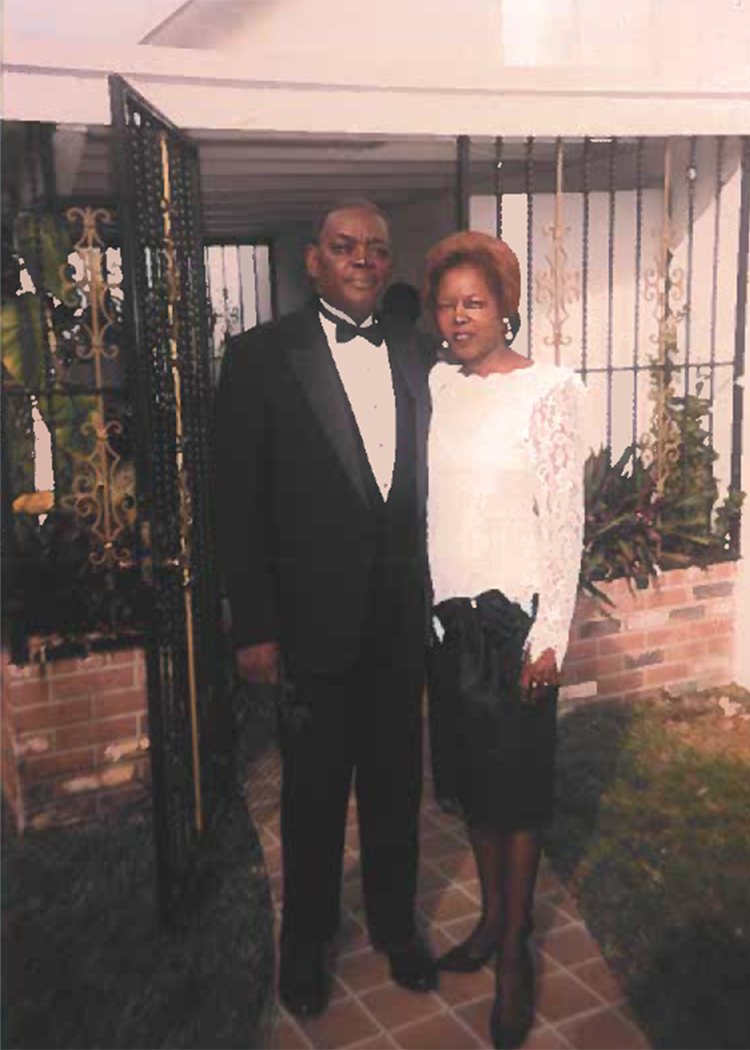
Coach Willard and Sylvia Cooper
Footnotes:
- deNazarie and Wells, City of Palatka City Directory 1915, 148.
- Rich & Eschbach, Spires in the Sun, 185.
- Campbell, Map of Palatka 1884.
- Webb’s Palatka Directory 1886, “John H. Purcell, carpenter” and “Joseph W. Purcell, carpenter” on Lemon Street, 309.
- Scardaville and Steinback, Cultural Resource Survey of Palatka, Florida, 44.[as cited in Rich & Eschbach (2023). Spires in the Sun].
- Gordon, Heart and soul of Florida: sacred sites and historic architecture, 165.
- Upjohn’s pattern book was published in 1852. Gordon, 166.
- Rich & Eschbach, 185.
- Alvers, In Remembrance of Me: St. Mark’s Episcopal Church, 1853-2003., 32-33.
- Spirit of Missions, Episcopal Church. Domestic and Foreign Missionary Society, 189; Episcopal Church, Diocese of Florida (1838-2001). Journal of the Annual Council [Convention] of the Protestant Episcopal Church in the Diocese of Florida [as cited in Alvers, 2003].
- Alvers, 33.
- 39th Annual Council, The Journal for the Episcopal Conference 1883,
- deNazarie and Wells 1915, 64.